Coach-ready serve-receive practice
Volleyball serve-receive drills: choose the right progression
From the Vollyze product team. This guide combines current coach-education sources with the match-to-practice workflow and real English screens available in Vollyze.
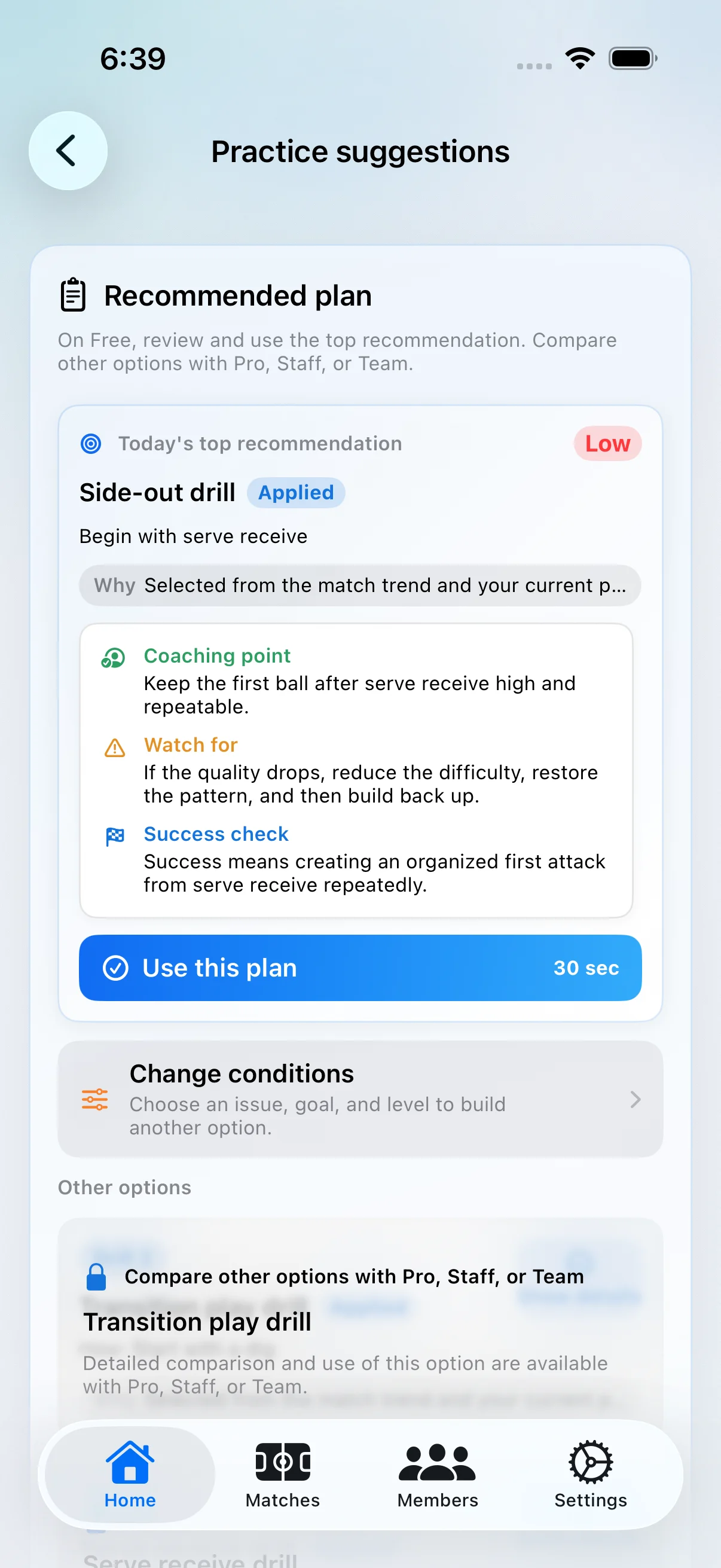
- Identify what broke first: pass quality, seam ownership, first-ball offense, one rotation or score pressure.
- Choose a progression that preserves the same read and decision from the match.
- Score an observable outcome and define when to increase or reduce difficulty.
Volleyball serve-receive drills are most useful when they solve a specific rally problem. A low passing average may point to first-contact control, but it can also hide a seam-ownership problem, one difficult rotation or a team that passes acceptably and still cannot create a useful first attack. Those situations should not all lead to the same drill.
Begin with the first decision that failed. Then choose the smallest game-like progression that recreates it. The drill should eventually include a real serve over a net, the team's actual responsibilities and the next contact. This keeps practice connected to side-out rather than turning passing into an isolated target exercise.
The short answer
Train the first broken link in the side-out chain.
Do not add complexity until the team can solve the intended read. Do not stop at pass quality once the team is ready to connect the setter and first attack.
- Read What serve and space must the passer recognize?
- Connect What should contacts two and three become?
- Check What result proves the response is improving?
Quick drill selector
What broke first in the match?
Choose the earliest repeatable problem. The selector suggests a starting progression, not a diagnosis.
Read-to-target progression
Reduce the number of decisions, use a real ball over the net and score playable control before adding the first attack.
Open the full setupSeam-ownership wave
Keep the receiving unit together, target shared space and reward an early call plus a playable team outcome.
Open the full setupServe receive to two attack options
Score the pass by what it unlocks. Connect the setter and first-ball offense instead of ending the rep at a target.
Open the full setupRotation repair
Rebuild the same legal order, receiver responsibilities and setter release before repeating the serve pattern that caused pressure.
Open the full setupSide-out pressure game
Use a visible score and short rounds so the receiving unit must execute the same first-contact plan after an error or late in a set.
Open the full setupFour rules for a serve-receive drill that transfers to a match
USA Volleyball's official lesson-plan resources recommend game-like combinations, a net, player-tracked scoring and shorter varied work rather than long isolated blocks. Its article on game-like training also stresses reading, reacting and keeping a clear purpose. The five progressions below apply those ideas to common serve-receive problems.
- Start with a serve or a realistic over-net ball. A temporary reduction in speed or distance can help learning, but the passer still needs flight, movement and a net to read.
- Keep the intended formation visible. The number of passers, seam rules and setter release should move toward what the team will use in competition.
- Connect the next contact. Once control is stable, include the setter and an attack decision so the pass is evaluated by the offense it creates.
- Score the purpose. Count attempts, playable outcomes, options or side-outs. Avoid a score that rewards a different behavior from the stated goal.
Adapt every activity. Reduce court size, speed, jump volume, player count and competitive pressure for younger or developing athletes. Follow your governing body, facility and safeguarding requirements.
Drill 1
Read-to-target progression for unstable first contact
Use this when too many serves become aces, overpasses or emergency second contacts. The purpose is not a perfect platform pose. It is an earlier read and a controlled ball that gives the team a next action.
- Players
- 5-8
- Time
- 6-10 minutes
- Primary check
- Playable passes / attempts
- Equipment
- Net, balls, target zone
Setup and scoring
- Place two or three passers in the formation they are learning, with one target or setter.
- Servers work from a distance that creates a readable but honest flight. Call the intended zone only if that is part of the training goal.
- A controlled pass that allows a normal second contact scores 1. A pass into the agreed setter window scores 2. An ace or overpass scores for the serving group.
- Run short rounds, record attempts and rotate passers without breaking the receiving unit's communication.
Move the server closer, use a standing float or narrow the receiver's decision without removing the net.
Vary short/deep serves, add a setter and require a controlled second contact before the rep is complete.
Success check: choose a realistic target for the group, such as 12 playable passes in the last 15 attempts. Keep the denominator and serve difficulty beside the result.
Drill 2
Seam-ownership wave for communication and movement
Use this when passers hesitate, collide or leave shared space untouched. The receiving unit should solve responsibility before the ball reaches the platform. Do not reward a loud call that produces no useful team contact.
- Players
- 7-12
- Time
- 8-12 minutes
- Primary check
- Early call + playable result
- Equipment
- Net, balls, seam targets
Setup and scoring
- Keep a two- or three-passer unit together. Put two or more servers opposite them and a target near the intended setter area.
- Servers alternate between seam, short and body zones. Start predictable if ownership is new, then randomize the target.
- The receiving unit scores 2 for an early ownership call and a pass to target, 1 for an early call and playable pass, and 0 when responsibility is unresolved.
- After a short round, the next unit enters immediately while the previous group records its score.
The AVCA's Rapid Fire serve-receive example uses timed rounds and repeated live serves to train focus, communication, movement and competitiveness. Use that source as one reference, then fit the pace and workload to your team.
Mark each player's base and primary seam, then serve only one shared channel until the language is consistent.
Remove target calls, mix serve types and require the unit to transition into its next offensive position.
Success check: track unresolved seams separately from poor platform outcomes. The next practice choice is different when ownership improved but pass control did not.
Drill 3
Serve receive to two first-attack options
Use this when the passing number looks acceptable but the offense remains predictable. The rep continues through contacts two and three, and the score rewards the options created rather than the location of the pass alone.
- Players
- 8-12
- Time
- 10-15 minutes
- Primary check
- Two options available + side-out
- Equipment
- Full court, balls, score board
Setup and scoring
- Build the receiving side with its normal passers, setter and at least two attackers. Put servers and enough defenders opposite to create an honest first-ball decision.
- Every rep begins with a serve. The receiving unit calls its intended first-ball options before contact.
- A side-out with two credible attack options earns 2. A side-out from an out-of-system ball earns 1. The serving side earns 1 by winning the rally.
- Track which rotations or serve zones remove an option. Pause only when the same decision repeatedly fails.
Use one primary and one safety option with no block, then add a controlled defense after the connection becomes repeatable.
Add blockers, target a known pressure zone and require the setter to choose from the actual read rather than a scripted set.
Success check: record both option availability and rally outcome. A team can improve its first-ball shape before its side-out rate moves.
Drill 4
Rotation repair for one repeatable matchup problem
Use this when pressure clusters in one rotation. Recreate the legal order, receiver map, setter movement and intended first attack. A generic passing drill may hide the positional relationship that caused the problem.
- Players
- 7-12
- Time
- 8-14 minutes
- Primary check
- Side-outs in the target rotation
- Equipment
- Lineup map, net, balls
Setup and scoring
- Place the six players in the target rotation and confirm legal order before changing into the planned serve-receive formation.
- Reproduce the serve type or zone that created pressure. Keep the setter release and first-attack responsibility visible.
- Run a fixed set of serves, then compare side-outs, playable first contacts and attack options with the original match question.
- Change one variable at a time: receiver depth, seam ownership, setter route or first-ball option.
Walk through base positions and release paths without a serve, then add a controlled over-net ball.
Alternate two serve targets, add the opponent's likely block and start the round at a meaningful score.
Success check: compare equivalent rounds in the same rotation. Do not mix results from different receiver maps and call it one sample.
Use the free six-rotation serve-receive planner when the staff needs to clarify legal order, setter release, seams and intended first attack before running this progression.
Drill 5
Side-out pressure game for scoring runs and late-set execution
Use this when the receiving unit performs in controlled repetitions but loses its plan after one error or during a scoring run. The score should create consequence without turning the practice into punishment.
- Players
- 8-12
- Time
- 10-16 minutes
- Primary check
- Side-outs after an error
- Equipment
- Full court, balls, visible score
Setup and scoring
- Use 4v4, 5v5 or 6v6 based on the roster, but keep the receiving formation and first-ball decision relevant.
- Begin each short round at 20-20, or give the serving team a small lead. Every rally starts with a serve.
- The receiving side must side out to rotate or clear the deficit. The serving side tries to build a two- or three-point run.
- After an error, require the unit to restate its seam and first-ball plan before the next serve. Keep the reset short.
Use a smaller deficit, a controlled server or a bonus point for a playable first contact even when the rally is lost.
Target the pressure rotation, vary server type and require two successful side-outs across consecutive rounds.
Success check: count first-ball side-outs and side-outs immediately after a receiving error. The second number shows whether the team's reset behavior is transferring.
How to adapt these drills by level
| Team context | Start with | Add next | Avoid |
|---|---|---|---|
| New or youth team | Smaller court, slower over-net ball, two clear receiver jobs | Real serve, setter target, simple playable-pass score | Long lines and a target the group cannot reach |
| Developing school team | Actual formation, seam language, short scored rounds | Setter movement and two first-ball options | Changing every rule before one pattern is learned |
| Experienced club or high school team | Rotation and opponent serve pattern from match evidence | Block/defense, scoreboard pressure and reset behavior | Reporting one pass average without serve or rotation context |
The FIVB's official coaching manuals and education resources include service-reception technique, movement and formation progressions. Use those materials and your governing body's coach education when a player needs technical instruction beyond the team-practice structure described here.
Use match evidence without letting one percentage choose the practice
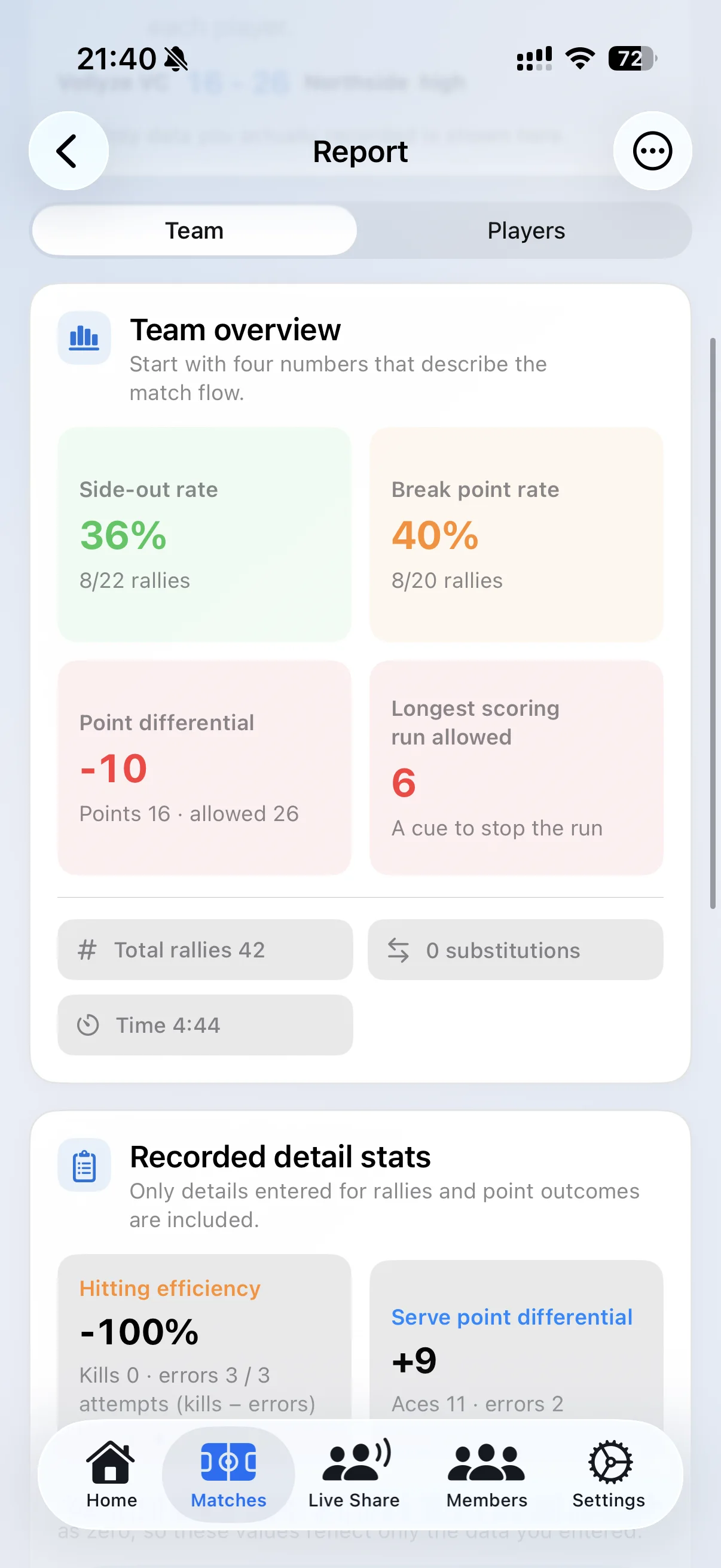
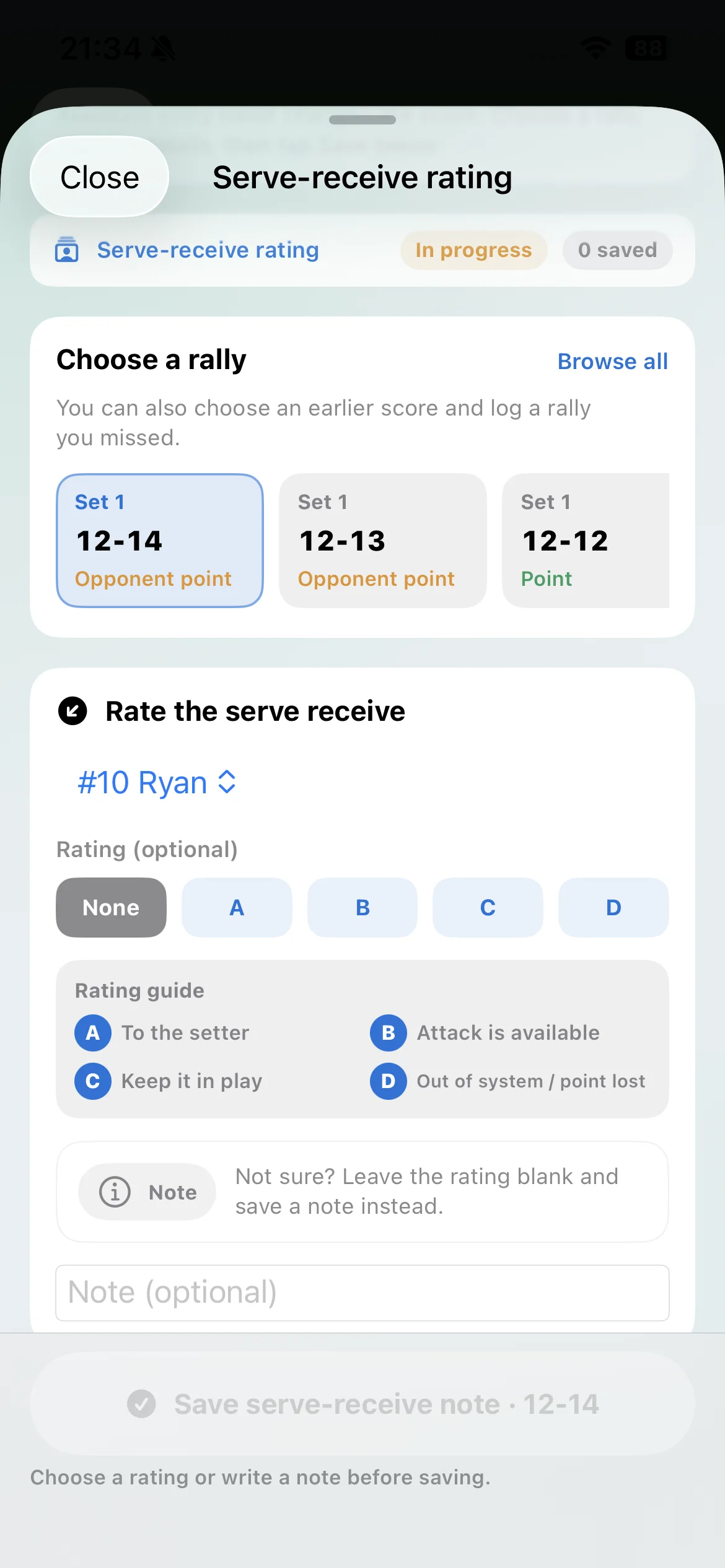
A pass rating, side-out rate or rotation differential can narrow the question. It cannot explain every cause. Check the sample, serve type, receiver responsibility, setter availability and what the staff saw. Then write a short decision brief before selecting the drill.
- Issue
- The receiving unit gave up a four-point run in Rotation 5 when the opponent served the left seam.
- Evidence
- Three of five recorded first contacts removed the intended first attack, and two included an unresolved ownership call.
- Practice response
- Run the seam-ownership wave in R5, then connect the same serve to two first-ball options under a visible score.
Put the drill inside a complete practice plan
A serve-receive drill is one block, not the whole session. Give it a clear purpose, time, player format, success check and progression. Then decide what should come before it and how the team will apply it in connected play.
Download the free fillable volleyball practice plan template to keep the match pattern, session blocks, staff ownership and review on one page. No email or account is required.
Frequently asked questions
What is the best volleyball serve-receive drill?
The best starting drill matches the first problem in the rally. Use read-to-target for control, seam ownership for communication, pass-set-attack for connection, rotation repair for one lineup context and a pressure game for late-set execution.
How should a coach score the drill?
Score the stated purpose. Count playable passes for control, early calls plus playable outcomes for seams, attack options for connection and side-outs for full-rally application.
How many passers should be used?
Move toward the number and responsibilities the team will use in competition. Smaller groups can increase contacts during learning, but finish in the intended formation.
Are these drills suitable for beginners?
Yes, after reducing distance, court size, serve difficulty and scoring demands. Preserve a ball over the net and a clear next contact.
How often should a team practice serve receive?
Match the frequency to the team's needs and training load. Short, varied and connected segments can be more useful than one long isolated block.
Can statistics choose the drill automatically?
Statistics can surface a pattern, not replace coaching judgment. Review the sample, opponent, rotation, available players and what the staff observed before adapting a recommendation.
Turn one serve-receive problem into the next practice.
Start free in Vollyze, record the match and keep the evidence, staff review and selected practice focus connected.